
Cabinet Colors vs. Natural Wood
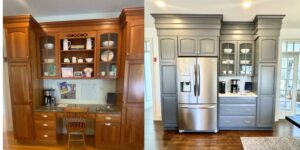 Why Painted Kitchens Can Be Timeless Too
Choosing cabinet colors over natural wood has become one of the biggest debates in kitchen design — and one of the biggest misconceptions.Somewhere along the way, people started believing that wood cabinetry is “timeless,” while painted cabinets are simply “trendy.” The reality is far more nuanced.
Timeless design has less to do with whether cabinetry is stained or painted, and far more to do with how thoughtfully the space is designed as a whole.
Natural wood cabinetry will always have a place in kitchen design. Wood adds warmth, texture, and character that can feel organic and inviting. Walnut, white oak, and rift-cut woods remain popular because they create depth and showcase natural variation that paint simply cannot replicate. In many homes, especially modern organic or mid-century inspired spaces, wood cabinetry can feel classic and enduring.
But painted cabinetry has earned its place as timeless as well.
A well-designed painted kitchen — especially in softer, sophisticated tones — can age beautifully for decades. White kitchens, for example, have remained consistently popular not because they are trendy, but because they create a clean, bright, adaptable backdrop that works with nearly every architectural style. The same can be said for warm greiges, muted taupes, soft sage greens, deep navy tones, and charcoal hues when used intentionally.
What often dates a kitchen is not necessarily the cabinet color itself, but the combination of finishes, exaggerated trends, or overly specific design choices tied to a certain era.
For example:
- Highly distressed finishes once dominated kitchens and now instantly reference the early 2000s.
- Certain orange-toned wood stains became associated with a very specific time period.
- Stark gray-on-gray kitchens may eventually feel connected to the late 2010s.
Yet both painted and stained cabinetry continue evolving because the foundation of timelessness is balance, proportion, and quality craftsmanship.
Another important factor is that painted cabinetry allows homeowners to personalize a space in ways wood sometimes cannot. Color can soften a large kitchen, create contrast, highlight architectural details, or make a home feel more reflective of the people living in it. A deep painted island paired with lighter perimeter cabinetry, for example, can feel elegant for years when done with restraint and intention.
The conversation should not be “wood versus painted.” Instead, it should be:
- Does the design fit the home?
- Does it feel cohesive?
- Are the materials high quality?
- Will the homeowner still love it years from now?
Some of the most timeless kitchens today blend both elements together — painted perimeter cabinetry paired with a warm wood island, or natural wood accents incorporated into an otherwise painted kitchen. These combinations create depth and prevent a space from feeling one-dimensional.
At the end of the day, timeless design is not about avoiding color. It is about avoiding extremes and creating a space with balance, warmth, and authenticity. A thoughtfully selected cabinet color can feel every bit as timeless as natural wood — and sometimes even more personal.